Tuesday, November 22, 2011
On Meddling (Part 2 of 2) by Lewis Thomas
Lewis Thomas was a well known biologist and essayist who wrote the following piece on meddling with complex systems in 1974. This essay is divided into 2 blogs. To read part 1 click here.
These were the classical examples of medical intervention in the prescientific days, and there can be no doubt that most of them did more harm than good, excepting perhaps the incantations.
With syphilis, of course, the problem now turns out to be simple. All you have to do, armed with the sure knowledge that the spirochete is the intervener, is to reach in carefully and eliminate this microorganism. If you do this quickly enough, before the whole system has been shaken to pieces, it will put itself right and the problem solves itself.
Things are undoubtedly more complicated in pathological social systems. There may be more than one meddler involved, maybe a whole host of them, maybe even a system of meddlers infiltrating all parts of the system you're trying to fix. If this is so, then the problem is that much harder, but it is still approachable, and soluble, once you've identified the fact of intervention.
It will be protested that I am setting up a new sort of straw demonology, postulating external causes for pathological events that are intrinsic. It is not in the nature of complex social systems to go wrong, all by themselves, without external cause? Look at overpopulation. Look at Calhoun's famous model, those crowded colonies of rats and their malignant social pathology, all due to their own skewed behavior. Not at all, is my answer. All you have to do is find the meddler, in this case Professor Calhoun himself, and the system will put itself right. The trouble with those rats is not the innate tendency of crowded rats to go wrong, but the scientists who took them out of the world at large and put them into too small a box.
I do not know who the Calhouns of New York City may be, but it seems to me a modest enough proposal that they be looked for, identified, and then neatly lifted out. Without them and their intervening, the system will work nicely. Not perfectly, perhaps, but livably enough.
We have a roster of diseases which medicine calls "idiopathic" meaning that we do not know what causes them. The list is much shorter than it used to be; a century ago, common infections like typhus fever and tuberculous meningitis were classed as idiopathic illnesses. Originally, when it first came into the language of medicine, the term had a different, highly theoretical meaning. It was assumed that most human diseases were intrinsic, due to inbuilt failures of one sort or another, things gone wrong with various internal humors. The word "idiopathic" was intended to mean, literally, a disease having its own origin, a primary disease without any external cause. The list of such disorders has become progressively shorter as medical science has advanced, especially within this century, and the meaning of the term has lost its doctrinal flavor; we use "idiopathic" now to indicate simply that the cause of a particular disease is unknown. Very likely, before we are finished with medical science, and with luck, we will have found that all varieties of disease are the result of one or another sort of meddling, and there will be no more idiopathic illness.
With time, and a lot more luck, things could turn out this way for the social sciences as well.
To view part 1 of this 2 part essay from 1974 click here.
Monday, November 14, 2011
On Meddling (Part 1 of 2) by Lewis Thomas
Lewis Thomas was a well known biologist and essayist who wrote the following piece in 1974. In this essay, he reflects on the unintended consequences of trying to affect (or "meddle" with) any part of a complex system without first understanding the whole (as best you can). It's a highly readable piece on systems thinking with indirect application to homelessness policy.
When you are confronted by any complex social system, such as an urban center or a hamster, with things about it that you're dissatisfied with and anxious to fix, you cannot just step in and set about fixing with much hope of helping. This realization is one of the sore discouragements of our century. Jay Forrester has demonstrated it mathematically, with his computer models of cities in which he makes clear that whatever you propose to do, based on common sense, will almost inevitably make matters worse rather than better. You cannot meddle with one part of a complex system from the outside without the almost certain risk of setting off disastrous events that you hadn't counted on in other, remote parts. If you want to fix something you are first obliged to understand, in detail the whole system, and for every large systems you can't do this without a very large computer. Even then, the safest course seems to be to stand by and wring hands, but not to touch.
Intervening is a way of causing trouble.
If this is true, it suggests a new approach to the problems of cities, from the point of view of experimental pathology: maybe some of the things that have gone wrong are the result of someone's efforts to be helpful.
It makes a much simpler kind of puzzle. Instead of trying to move in and change things around, try to reach in gingerly and simply extract the intervener.
The "Meddling" image at top is by Mark Wilson. If interested in T-shirts or hoodies with this design click here.
Thursday, September 15, 2011
Excerpt from How to Be a Homeless Frenchman (Part 2 of 2) by Paula Young Lee
The following is an excerpt from the book How to Be a Homeless Frenchman (2011). Be aware there is some profanity in the excerpt.
Bob Dylan once said that a poem is a naked person. By that measure, there’s a lot of poetry in a homeless shelter. Every day, there were dozens of new arrivals, dredged in poverty and stinking of hopelessness, standing in the 6pm bed line hoping for a space. Per shelter rules, we had to strip down and take a shower before we could be processed for the evening. We were ordered to keep things “clean,” i.e. no drugs, no sex, and no staring. Get naked, and stop fidgeting! Grumbling yet pleased, we’d remove every stitch of clothing and hop across cold wet tiles in bare feet, swearing “fuck fuck fuckety fuck fuck! This fuckin’ water’s fuckin’ cold!”
“Yo’ mama!”
“Fuckety fuck fuck!”
In this place, it sounded like giggling.
Every day, it was a water ballet of homeless men raising their arms and twirling around, performing Nutcracker under the nozzles. As the clothes came off the usual social prejudices fell away, replaced by the quirky taxonomy of the despised. Young, old, short, fat, tall, bald, crippled, straight, bent, black, brown, and white. Nobody cared, except maybe the transvestites. Every man in the showers was butt-naked and frozen, shivering as flesh confronted water, cringing against the spray, delighting in the warmth, smiles spreading across faces, opening mouths the way that women open their mouths when putting on lipstick. A reflex. A kiss in the mirror. There was something sublime about the happy sounds we made once we started soaping up under the fizz and pop of hot water, singing “Row, row, row your boat, gently down the stream! Merrily, merrily, merrily, life is but a dream!”
And round and round it goes.
One day, good old Larry Chase, one of the unofficial regulars, stripped down to hairy pink, stuck his head under the spray, lathered up his beard, and started to sing. From behind the brouhaha of spittle and spray, his deep voice floated up, loud, confident and strong, an aboriginal calling to the mountaintops:
When I was just a little girrrrrl,
I asked my mother, What will I be?
Will I be pretty, will I be rich?
Here’s what she said to meeeee…”
Pause.
As if on cue, all the men joined in the chorus:
Queeeeeeeee, sera, sera,
Whatever will be, will be,
The future’s not ours to see,
Que sera, sera.
What will be, will beeeee!
Throatily we sang, with gusto and passion and glee, inner girls swishing invisible skirts, relishing the incomparable absurdity of being Doris for today. Naked men of every stripe and color, strangers stripped of every stitch -- bereft, barefoot, knowing nothing but the theme song to the Man Who Knew Too Much, recalling drowsy days of caramel when we were young and in love, asking our sweethearts, what lies ahead? Will we have rainbows and endless nights of bliss? Will we lie back, sighing, for another kiss? So many possibilities. Whatever will be, will be. Just not this.
But this is what we got. In four-part harmony.
Pure poetry.
How to Be a Homeless Frenchman by Paula Lee is now available to order online at www.harvardbooks.com, and a www.wellesleybooksmith.com via special order/phone only, 781-431-1160. An e-book Kindle version is currently available on www.amazon.com. A related Give US Your Poor blog entry by Paula Lee can be found by clicking here.
Sunday, September 11, 2011
How to be a Homeless Frenchman (Part 1 of 2) by Paula Lee
"…for Chinese acupuncturists, all sickness is home sickness. It is what happens to a healthy body when the soul feels alone. Seeking solace elsewhere, the soul abandons the heart, the bones, and the body becomes full of holes. Sickness moves in, gets comfortable, and decides to stay. Homelessness happens to the body when the soul forgets it’s free to go."
-From How to Be a Homeless Frenchman, 2011
Everybody has a story. Even boring people have tales to tell. In times of quiet, confessions spill. “I’m afraid of giraffes.” “My wedding dress was a rental.” “I hoard lentils.” “I used to be homeless.” Excuse me? Not ‘homeless’ in an angst-ridden teenager way, but actually out on your ass and living hard in the street? On the one hand, it’s extraordinary that so many Americans have homes to lose in the first place. A testimony to modern laws that make it possible for ordinary citizens to own real estate. On the other hand, the loss of a house to debt, foreclosure, or random acts of God prompts few to celebrate the end of feudalism. But this is silly, you say. Homelessness isn’t about losing a house. It’s really about having no place to live.
Indeed.
“I’m homeless” is a statement of individual loss. “I have no place to live” is a confession of a deep and terrible truth. For it is true of all of us, going straight to the heart of what we like to claim is the “human difference,” a difference insisted upon for hundreds of years as the bedrock concept of civilization. We are the opposite of nature. We conquer and subdue. For we are superior to nature, and here is the iPod as proof! When humans become homeless on this engineered earth, they are as holes poking through the lovely fictions that make electric dreams come true.
I hear the phrase, “I used to be homeless” a lot: pearls falling from the most unlikely mouths. The stock boy. The stock broker. The socialite and her son. Listen, and you will hear tales of troubles fallen upon your nice neighbor and, maybe, the pretty girl sitting next to you as you wait for your teeth to be cleaned. In my case, it was my brother-in-law who’d lived on the streets, and his story was so uncommon, so surprising that it turned itself into a book. How to Be a Homeless Frenchman hopes to change the dialogue on homelessness by insisting that joy is not a commodity, and that laughter is everywhere, even in a homeless shelter. Strange times call for stranger solutions. So let me tell you a story that begins once upon a time and ends the way all stories do – not with a happy ending, but when we close the book.
How to Be a Homeless Frenchman by Paula Lee is now available to order online at www.harvardbooks.com, and a www.wellesleybooksmith.com via special order/phone only, 781-431-1160. An e-book Kindle version is currently available on www.amazon.com. Part II of this blog entry by Paula will appear shortly.
-From How to Be a Homeless Frenchman, 2011
Everybody has a story. Even boring people have tales to tell. In times of quiet, confessions spill. “I’m afraid of giraffes.” “My wedding dress was a rental.” “I hoard lentils.” “I used to be homeless.” Excuse me? Not ‘homeless’ in an angst-ridden teenager way, but actually out on your ass and living hard in the street? On the one hand, it’s extraordinary that so many Americans have homes to lose in the first place. A testimony to modern laws that make it possible for ordinary citizens to own real estate. On the other hand, the loss of a house to debt, foreclosure, or random acts of God prompts few to celebrate the end of feudalism. But this is silly, you say. Homelessness isn’t about losing a house. It’s really about having no place to live.
Indeed.
“I’m homeless” is a statement of individual loss. “I have no place to live” is a confession of a deep and terrible truth. For it is true of all of us, going straight to the heart of what we like to claim is the “human difference,” a difference insisted upon for hundreds of years as the bedrock concept of civilization. We are the opposite of nature. We conquer and subdue. For we are superior to nature, and here is the iPod as proof! When humans become homeless on this engineered earth, they are as holes poking through the lovely fictions that make electric dreams come true.
I hear the phrase, “I used to be homeless” a lot: pearls falling from the most unlikely mouths. The stock boy. The stock broker. The socialite and her son. Listen, and you will hear tales of troubles fallen upon your nice neighbor and, maybe, the pretty girl sitting next to you as you wait for your teeth to be cleaned. In my case, it was my brother-in-law who’d lived on the streets, and his story was so uncommon, so surprising that it turned itself into a book. How to Be a Homeless Frenchman hopes to change the dialogue on homelessness by insisting that joy is not a commodity, and that laughter is everywhere, even in a homeless shelter. Strange times call for stranger solutions. So let me tell you a story that begins once upon a time and ends the way all stories do – not with a happy ending, but when we close the book.
How to Be a Homeless Frenchman by Paula Lee is now available to order online at www.harvardbooks.com, and a www.wellesleybooksmith.com via special order/phone only, 781-431-1160. An e-book Kindle version is currently available on www.amazon.com. Part II of this blog entry by Paula will appear shortly.
Monday, August 29, 2011
Homelessness in History
We’ve learned a lot about addressing the issue of homelessness with different audiences in the past 10 years. For one thing, the subject itself (whether for donors or public audiences) can be touchy. It’s not a happy subject (over a million homeless children, ever-increasing homeless veterans, overall numbers rising dramatically). And with increased unemployment, foreclosures, high health care costs and two prolonged wars, many people are peeking over the edge of homelessness that were not before. This has always been the case in poor economic times in the U.S. but more significantly when there has been economic transition.
I've been told there was not really a history of homelessness, that it is a modern phenomenon. But that is simply not true. Historian Ken Kusmer, author of Down And Out, on the Road: The Homeless in American History, reminds us that we have had periods of homelessness in the past besides the Great Depression. In the 1980s (the start of modern homelessness) we saw the shift from a manufacturing economy to a service/information economy. Kusmer describes a similar shift in the late 1880s when the nation moved from an agricultural economy to a manufacturing one. Both shifts meant upheaval for many workers that were left extremely vulnerable and, in the worst cases, without a home. Many people were left more vulnerable from the shift and when you added illness, injury or strained social networks, the combination became a type of homelessness cocktail.
The stigma of having no home in 1880s--true today as well--is evident in Stephen Crane’s, “An Experiment in Misery,” which first appeared as an article in the New York Press (1894) and was later released as a book (1896).
He was going forth to eat as the wanderer may eat, and sleep as the homeless sleep. By the time he had reached City Hall Park he was so completely plastered with yells of "bum" and "hobo," and with various unholy epithets that small boys had applied to him at intervals, that he was in a state of the most profound dejection.
War veterans have also been overrepresented among homeless people in American history. In the modern era, Vietnam veterans and veterans from the Iraq and Afghanistan wars may return with psychological and physical scars that extend the war beyond the battlefield, can lead to drug addiction and/or isolation from others, and for many, homelessness. A number of Civil War veterans were also homeless. Many became accustomed to traveling, living on the road as soldiers, and once the war ended in 1865 continued living on the road either for economic reasons, afflictions from the war or because they had nothing to go back to.
Why is a historical lens on homelessness important? There is a belief that homelessness is tied to modern times and economic recession. When the economy declines, some people are left homeless. It seems logical enough. But history shows us that this is not always the case. Other forces are at play. In the early 1980s when Ronald Regan took office, the economy was horrible and homelessness was becoming visible in ways that was new, including the presence of homeless families. When the economy recovered and soared for many in that decade, rates of homelessness nonetheless continued to rise. It rose through the dot.com explosion of the Bill Clinton 1990s and it rose through the economic downturns following 9/11 and the Great Recession of George W. Bush’s presidency. Latest federal data indicates rates of homelessness are currently holding steady. We’ll see if that is accurate.
Today our challenge is not to get stuck with the same old models, not play the blame game across ideological sides and not to assume a rising tide will lift all boats. Instead we need to take a holistic, systemic look at homelessness. We need to collaborate across federal departments more than ever and across sectors while incorporating best practices that are proven effective. And in our collective work in this area we need to maintain a humanistic—especially historic—perspective.
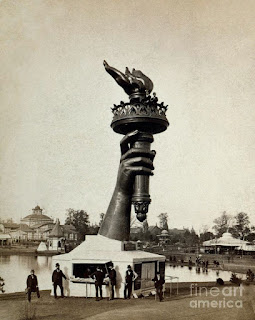
When we think of ourselves as Americans at our best, we think of the inscription at the base of the Statue of Liberty: Emma Lazarus’s 1883 poem, “The New Colossus” (from which our organization derives its name). It’s a vision of America symbolically reaching out to those in need of comfort, offering welcome and, implied, a home.
Give me your tired, your poor, your huddled masses yearning to breathe free, the wretched refuse of your teeming shore. Send these, the homeless, tempest-tost to me, I lift my lamp beside the golden door!

If you are concerned about homelessness in Massachusetts or elsewhere in the U.S. and would like to join our campaign, please visit our website at http://www.giveusyourpoor.org/ to (1) sign up for our newsletter, (2) make a donation, (3) engage your company, (4) host a house party, or (4) volunteer in other ways. Thanks!
This piece first appeared in a slightly different version as a blog entry for The Public Humanist in the Valley Advocate. The Public Humanist is the blog for the Massachusetts Foundation for the Humanities.
Photo by Lynn Blodgett, from his book, Amazing Grace: The Face of America's Homeless (Earth Aware Editions, 2007).
We’ve learned a lot about addressing the issue of homelessness with different audiences in the past 10 years. For one thing, the subject itself (whether for donors or public audiences) can be touchy. It’s not a happy subject (over a million homeless children, ever-increasing homeless veterans, overall numbers rising dramatically). And with increased unemployment, foreclosures, high health care costs and two prolonged wars, many people are peeking over the edge of homelessness that were not before. This has always been the case in poor economic times in the U.S. but more significantly when there has been economic transition.
I've been told there was not really a history of homelessness, that it is a modern phenomenon. But that is simply not true. Historian Ken Kusmer, author of Down And Out, on the Road: The Homeless in American History, reminds us that we have had periods of homelessness in the past besides the Great Depression. In the 1980s (the start of modern homelessness) we saw the shift from a manufacturing economy to a service/information economy. Kusmer describes a similar shift in the late 1880s when the nation moved from an agricultural economy to a manufacturing one. Both shifts meant upheaval for many workers that were left extremely vulnerable and, in the worst cases, without a home. Many people were left more vulnerable from the shift and when you added illness, injury or strained social networks, the combination became a type of homelessness cocktail.
The stigma of having no home in 1880s--true today as well--is evident in Stephen Crane’s, “An Experiment in Misery,” which first appeared as an article in the New York Press (1894) and was later released as a book (1896).
He was going forth to eat as the wanderer may eat, and sleep as the homeless sleep. By the time he had reached City Hall Park he was so completely plastered with yells of "bum" and "hobo," and with various unholy epithets that small boys had applied to him at intervals, that he was in a state of the most profound dejection.
War veterans have also been overrepresented among homeless people in American history. In the modern era, Vietnam veterans and veterans from the Iraq and Afghanistan wars may return with psychological and physical scars that extend the war beyond the battlefield, can lead to drug addiction and/or isolation from others, and for many, homelessness. A number of Civil War veterans were also homeless. Many became accustomed to traveling, living on the road as soldiers, and once the war ended in 1865 continued living on the road either for economic reasons, afflictions from the war or because they had nothing to go back to.
Why is a historical lens on homelessness important? There is a belief that homelessness is tied to modern times and economic recession. When the economy declines, some people are left homeless. It seems logical enough. But history shows us that this is not always the case. Other forces are at play. In the early 1980s when Ronald Regan took office, the economy was horrible and homelessness was becoming visible in ways that was new, including the presence of homeless families. When the economy recovered and soared for many in that decade, rates of homelessness nonetheless continued to rise. It rose through the dot.com explosion of the Bill Clinton 1990s and it rose through the economic downturns following 9/11 and the Great Recession of George W. Bush’s presidency. Latest federal data indicates rates of homelessness are currently holding steady. We’ll see if that is accurate.
Today our challenge is not to get stuck with the same old models, not play the blame game across ideological sides and not to assume a rising tide will lift all boats. Instead we need to take a holistic, systemic look at homelessness. We need to collaborate across federal departments more than ever and across sectors while incorporating best practices that are proven effective. And in our collective work in this area we need to maintain a humanistic—especially historic—perspective.
When we think of ourselves as Americans at our best, we think of the inscription at the base of the Statue of Liberty: Emma Lazarus’s 1883 poem, “The New Colossus” (from which our organization derives its name). It’s a vision of America symbolically reaching out to those in need of comfort, offering welcome and, implied, a home.
Give me your tired, your poor, your huddled masses yearning to breathe free, the wretched refuse of your teeming shore. Send these, the homeless, tempest-tost to me, I lift my lamp beside the golden door!
If you are concerned about homelessness in Massachusetts or elsewhere in the U.S. and would like to join our campaign, please visit our website at http://www.giveusyourpoor.org/ to (1) sign up for our newsletter, (2) make a donation, (3) engage your company, (4) host a house party, or (4) volunteer in other ways. Thanks!
This piece first appeared in a slightly different version as a blog entry for The Public Humanist in the Valley Advocate. The Public Humanist is the blog for the Massachusetts Foundation for the Humanities.
Photo by Lynn Blodgett, from his book, Amazing Grace: The Face of America's Homeless (Earth Aware Editions, 2007).
Sunday, June 26, 2011
Why T3? Why Now? by Jeff Olivet
Recently, the Center for Social Innovation partnered with the National Center on Family Homelessness to announce the launch of T3, an exciting new training institute dedicated to transforming the homeless services workforce. T3 stands for Think, Teach, Transform, and it is the most ambitious project of its kind.
T3 is more than a training institute. It is a center of connection for people to learn about best practices for ending homelessness in our nation. T3 allows people to connect with national experts, share what they are doing in their own communities, and learn from peers around the country doing the same work. We combine great content, adult learning theory, and beautiful design into packages of online and face-to-face learning that help homeless service providers enhance their knowledge and skills. Our hope is that they will become better equipped to sustain themselves in this very challenging and difficult work.
We know the homeless services workforce is spread thin. Workers are too often overworked, undertrained, and underpaid. They need and ask for training on how to do their jobs better.
Over our years of training service providers across the nation, we have learned that while many good training efforts exist, training is often haphazard or fragmented. Quality varies, and access to training is often limited by time constraints and travel budgets. To overcome these obstacles, we’ve created a flexible model that enables people to access a variety of learning opportunities on their own time, at their own pace, and in ways that are tailored to the needs of their workplace and community.
We offer training on basic knowledge about homelessness, subgroups within the homeless population, and evidence-based practices to address housing and service needs. We provide basic skills training to support all homeless service providers to better engage and connect with the people they serve. Then we go deeper with the advanced skills series that offer advanced training in areas such as Motivational Interviewing, Trauma-Informed Care, Critical Time Intervention, and other practices that have been proven to work.
Throughout the learning process, we support individual providers and their agencies to think differently about the work they do, teach each other how they have overcome challenges, and transform their communities.
If you are interested in learning more, find us on YouTube at or go to http://www.thinkt3.com/.
Jeff Olivet is the Executive Director of the Center for Social Innovation.
Monday, May 23, 2011
Give US Your Poor CD Hits Stage as Theatrical Performance by Donna Cotterell
I want to express my heartfelt appreciation to Give US Your Poor and Appleseed Recordings for doing such a tremendous job putting the Give US Your Poor CD together.
I must admit, when I originally received the CD, I thought I was only going to like one or two songs. I had received a signed copy in the mail from my friend, Mighty Sam McClain. I love Sam’s music, therefore, I thought I was only going to like the songs that Sam appears on. Lo and behold, I fell in love with the entire CD. The opening song, “Land of 10,000 Homeless,” (Andrew Turpening) speaks to many of us, who but for the grace of God could be out on the street, especially in this economy. The vocals on “No Good Reason” (Natalie Merchant & Friends) are so craftily blended and the ending crescendo of voices sends chills up my spine. I love the spoken word pieces by Danny Glover and Tim Robbins; Glover transcends gender and race in his rendition of “My Name is Not Those People.” One of my favorites on the CD is “Stranger Blues” by Sweet Honey in the Rock. It is such a haunting melody and bears witness to many who may go home from time to time, but are not fully accepted for whatever reason. Another favorite is Mario Frangoulis singing “Feels Like Home.” He has a voice like an angel and I feel blessed to have seen him perform that and “Amazing Grace” along with Mighty Sam live at the Strand Theater back in 2007 at the Give US Your Poor Concert for Boston’s Homeless. What a treat! The icing on the cake is the closing song, “Here and Now,” by Mark Erelli. It challenges each and everyone of us to think about what we can do to bring about change and also think about what is holding us back.
It is a powerful CD and I am please to announce that I am bringing a theatrical performance based on the CD to the stage. Our pilot performance will be June 4, 2011 2-4 PM at Messiah Baptist Church at 80 Legion Parkway in Brockton, MA. The event will be a free performance with a panel discussion afterwards. I hope you can make it. There will be more information to follow.
Warm regards,
Donna Cotterell
Donna Cotterell is an educator at Smith Leadership Academy Charter Public School in the Fields Corner section of Dorchester, MA. She leads a theatrical company, Indaba Theatre of New England, that uses theater as therapy to help individuals overcome obstacles in their lives.
I must admit, when I originally received the CD, I thought I was only going to like one or two songs. I had received a signed copy in the mail from my friend, Mighty Sam McClain. I love Sam’s music, therefore, I thought I was only going to like the songs that Sam appears on. Lo and behold, I fell in love with the entire CD. The opening song, “Land of 10,000 Homeless,” (Andrew Turpening) speaks to many of us, who but for the grace of God could be out on the street, especially in this economy. The vocals on “No Good Reason” (Natalie Merchant & Friends) are so craftily blended and the ending crescendo of voices sends chills up my spine. I love the spoken word pieces by Danny Glover and Tim Robbins; Glover transcends gender and race in his rendition of “My Name is Not Those People.” One of my favorites on the CD is “Stranger Blues” by Sweet Honey in the Rock. It is such a haunting melody and bears witness to many who may go home from time to time, but are not fully accepted for whatever reason. Another favorite is Mario Frangoulis singing “Feels Like Home.” He has a voice like an angel and I feel blessed to have seen him perform that and “Amazing Grace” along with Mighty Sam live at the Strand Theater back in 2007 at the Give US Your Poor Concert for Boston’s Homeless. What a treat! The icing on the cake is the closing song, “Here and Now,” by Mark Erelli. It challenges each and everyone of us to think about what we can do to bring about change and also think about what is holding us back.
It is a powerful CD and I am please to announce that I am bringing a theatrical performance based on the CD to the stage. Our pilot performance will be June 4, 2011 2-4 PM at Messiah Baptist Church at 80 Legion Parkway in Brockton, MA. The event will be a free performance with a panel discussion afterwards. I hope you can make it. There will be more information to follow.
Warm regards,
Donna Cotterell
Donna Cotterell is an educator at Smith Leadership Academy Charter Public School in the Fields Corner section of Dorchester, MA. She leads a theatrical company, Indaba Theatre of New England, that uses theater as therapy to help individuals overcome obstacles in their lives.
Subscribe to:
Posts (Atom)